

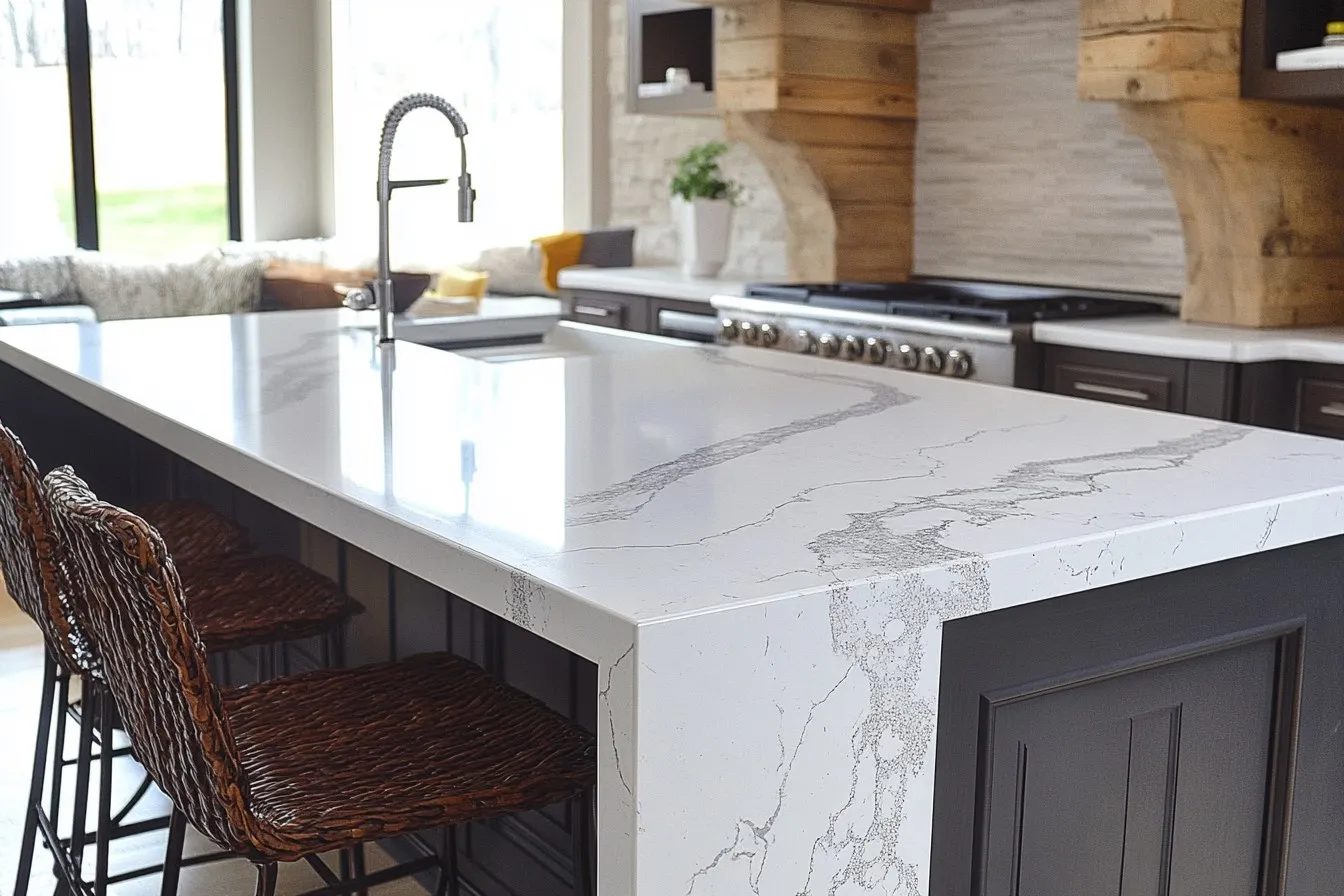
Homeowners who want a countertop with natural movement, lasting character, and strong everyday performance often begin their search with kitchen quartzite countertops. At Carpets Plus Design, homeowners in St. George and throughout Southern Utah can compare quartzite with quartz, granite, and marble while getting practical guidance for the entire countertop project.
The best countertop is not simply the one with the most dramatic veining. It should fit how the kitchen is used, the level of care the household prefers, the room’s lighting and cabinetry, and the installation details. A thoughtful consultation helps turn a beautiful slab into a well-planned kitchen surface.
What Is Quartzite and Why Is It Popular in Kitchens?
Quartzite is a natural stone formed when sandstone is subjected to intense heat and pressure over time. It is valued for its visual depth, organic color variation, and veining that can resemble marble while often offering a more durable surface for active kitchens. White, gray, cream, gold, blue, and taupe tones can all appear in quartzite, depending on the slab.
It is important not to confuse quartzite with engineered quartz. Quartzite is a quarried natural stone, while quartz countertops are manufactured using mineral particles, resins, and pigments. Both can be excellent options, but they offer different appearances, maintenance expectations, and performance characteristics. Seeing samples and discussing the differences before ordering can prevent costly misunderstandings.
How Does Quartzite Compare With Quartz, Granite, and Marble?
Each countertop material brings a different balance of style, durability, and upkeep. Instead of choosing based on appearance alone, consider how the kitchen will function every day.
- Quartzite: A strong choice for homeowners who want authentic natural-stone variation, dramatic veining, and a durable work surface. It may need periodic sealing, depending on the specific stone and finish.
- Quartz: A manufactured surface that offers consistent color and pattern options with generally simple daily care. It can be a practical fit for households seeking a more uniform appearance.
- Granite: A natural stone with one-of-a-kind patterning, dependable durability, and good heat resistance. Like other natural stones, it may require sealing based on the product selected.
- Marble: A classic material with elegant veining and a luxurious appearance. It is often best for homeowners who appreciate a surface that can develop character over time and are comfortable with more attentive care.
For a broader explanation of the differences between engineered quartz and natural stone, review this Consumer Reports resource on quartz and quartzite countertop differences. The comparison can help homeowners set more realistic expectations before narrowing down their material options.
How Carpets Plus Design Helps With Quartzite Selection
A small countertop sample is helpful, but it cannot always show the full personality of a natural quartzite slab. A complete slab may include bold veins, subtle shifts in tone, mineral deposits, or areas of movement that should be considered during layout planning. Reviewing materials in person allows homeowners to see how color and pattern may work with the overall kitchen.
Coordinate the Slab With the Rest of the Room
Countertop selection works best when it is considered alongside cabinets, flooring, backsplash materials, paint, appliances, and lighting. For example, warm wood cabinets can pair beautifully with quartzite that includes creamy white, beige, or soft gold movement. Cooler gray or charcoal cabinetry may suit a white, silver, or gray quartzite with quieter veining. Carpets Plus Design can help homeowners compare finishes in one setting, making it easier to avoid competing colors or patterns.
Plan the Important Details Early
Before a slab is fabricated, homeowners should consider the island layout, overhang requirements, sink and cooktop cutouts, faucet placement, edge profile, backsplash height, and seam locations. Large islands and waterfall edges may require especially careful slab planning so the most attractive portions of the stone remain visible in key areas.
What Maintenance Does Quartzite Require?
Quartzite is durable, but it is not maintenance-free. Daily care generally includes wiping the surface with a soft cloth and a pH-neutral stone cleaner. Spills from wine, citrus, oil, coffee, sauces, and other strongly colored or acidic foods should be cleaned promptly. Cutting boards help protect knives and reduce the chance of accidental surface damage, while trivets remain a smart precaution for hot cookware.
Sealing requirements can vary by quartzite slab, finish, fabrication process, and product used. Homeowners should follow the care recommendations provided for their specific countertop rather than assuming every natural stone needs the same treatment. No countertop is completely immune to chips, stains, scratches, or damage from impacts and improper use, but sensible care habits can help preserve its appearance.
Why Professional Fabrication and Installation Matter
Countertop installation is more than placing a slab on cabinets. Accurate measurement, support planning, cutout placement, seam alignment, safe handling, and final leveling all affect the finished result. Fabrication also involves cutting and shaping stone, which can generate silica-containing dust. The CDC and NIOSH provide useful countertop fabrication safety guidance that emphasizes dust-control practices such as wet cutting and source ventilation.
A well-organized countertop project typically includes an initial consultation, material comparison, field measurement, slab review, layout approval, fabrication scheduling, installation, and final inspection. Planning these steps in advance can reduce delays and help ensure that sink, appliance, and plumbing specifications are ready when needed.
Questions to Ask Before Ordering Quartzite
- Is the selected material natural quartzite or engineered quartz?
- What cleaning and sealing routine is recommended for this exact slab?
- Where will seams be placed, and which areas of the slab will be most visible?
- Which edge profiles are available for the chosen design?
- Are sink, faucet, cooktop, and appliance specifications finalized?
- What does the estimate include, and what preparation is required before installation?
Plan Your Southern Utah Countertop Project With Confidence
For St. George homeowners, a local consultation provides an opportunity to compare materials, review real samples, and make coordinated decisions for a kitchen or bathroom remodel. Carpets Plus Design can help simplify the process of choosing quartzite, quartz, granite, or marble while keeping practical installation details in focus. Bring cabinet samples, inspiration images, appliance information, and approximate measurements to start a more productive conversation about countertops.
