

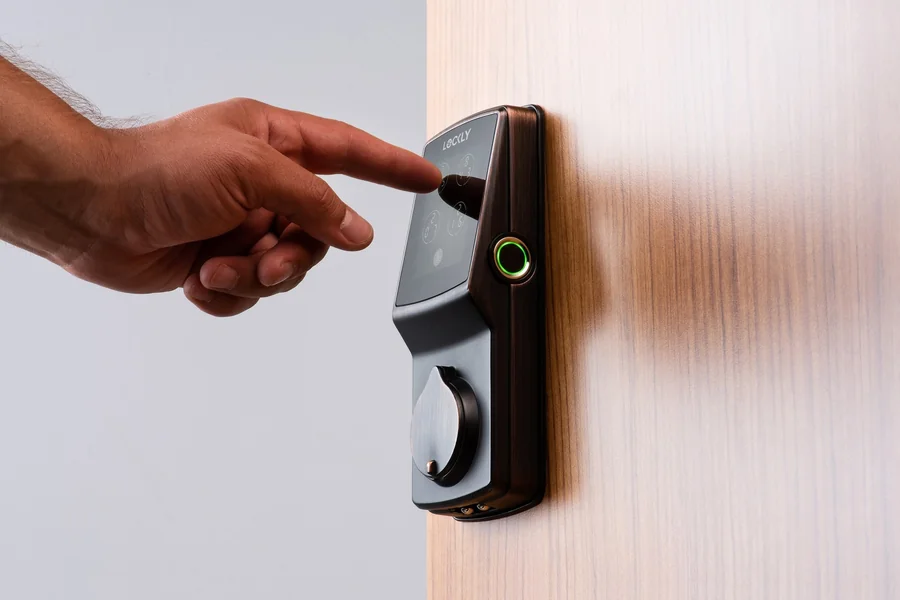
Smart home security has transformed the way we protect our houses, and one of the most innovative advancements is the biometric smart lock. Unlike traditional locks that rely on keys or codes, biometric locks use fingerprint recognition to grant access. With the simple touch of a finger, homeowners can secure their property quickly, conveniently, and reliably.
But how exactly does fingerprint technology work in smart locks? And why is it considered more secure than traditional options? Let’s break it down.
What Are Biometric Smart Locks?
A biometric smart lock is an electronic locking system that uses a person’s unique biological traits most commonly, their fingerprint to allow or deny entry. These locks eliminate the need for physical keys, which can be lost or stolen, and PIN codes, which can be forgotten or shared.
Fingerprint smart locks are particularly popular because fingerprints are:
- Unique to every individual (no two people have the same fingerprint).
- Always available (you can’t misplace your fingerprint like a key).
- Difficult to replicate (making unauthorized access harder).
This makes biometric locks a smart choice for homeowners who value both security and convenience.
How Fingerprint Technology Works in Smart Locks
The magic of biometric locks lies in their fingerprint recognition system. Here’s a step-by-step look at the process:
1. Fingerprint Enrollment
The first step is registering your fingerprint in the lock’s system. During enrollment, the lock captures an image of your fingerprint using a sensor. Instead of storing the actual fingerprint image, the system converts it into a digital template—a mathematical representation of your fingerprint’s unique ridges and patterns.
This ensures that even if the lock’s memory is compromised, no one can reconstruct your actual fingerprint.
2. Fingerprint Scanning
When you place your finger on the scanner, the lock reads your fingerprint in real time. Modern biometric locks use different types of sensors to capture prints, such as:
- Optical sensors – Take a photo of the fingerprint using light.
- Capacitive sensors – Use electrical currents to map the ridges and valleys of your fingerprint (more accurate than optical).
- Ultrasonic sensors – Send sound waves to create a 3D map of your fingerprint (highly secure and precise).
3. Template Matching
The lock compares the scanned fingerprint with the stored digital templates. Instead of looking for an exact match, it uses algorithms to measure similarities in key features like ridge endings, bifurcations, and patterns.
If the similarity score meets the system’s threshold, access is granted. Otherwise, the lock stays closed.
4. Access Granted or Denied
If your fingerprint matches one of the stored templates, the smart lock disengages, allowing you to enter. If not, access is denied, and some systems even send alerts to your smartphone.
This entire process happens in a fraction of a second, making fingerprint smart locks both fast and reliable.
Addressing Security Concerns: Are Fingerprint Locks Safe?
It’s natural to wonder if this technology can be fooled. Hollywood has certainly popularized the idea of lifting a fingerprint from a glass and creating a fake print. In reality, the security measures in modern biometric smart locks make this extremely difficult.
- Liveness Detection: High-quality locks incorporate liveness detection. Capacitive sensors require the electrical conductivity of live skin. Many now also measure temperature, pulse, or even the pattern beneath the skin surface (using ultrasonic technology) to ensure the finger is attached to a living person. This effectively defeats gummy bear or latex print replicas.
- Encryption: Your fingerprint data is heavily encrypted and stored locally on the lock itself. It is not sent to the cloud for verification, drastically reducing the risk of it being hacked remotely.
- Multi-Factor Authentication: The true power of a smart lock is its flexibility. You are never reliant on a single method. Most fingerprint locks also offer PIN codes, physical keys, or mobile app access. This means if you have a cut on your finger or a visitor needs access, you have multiple secure ways to grant it.
The Unbeatable Advantages of Fingerprint Smart Locks
Why choose a biometric lock over a traditional key or basic keypad?
- Ultimate Convenience: Your key is always with you. No more frantic searches in bags or pockets, especially when carrying groceries or in the pouring rain.
- Enhanced Security: You can’t lose your fingerprint, and it’s incredibly difficult to steal. You eliminate the risks of lost, stolen, or copied physical keys.
- Granular Access Control: You can enroll up to 100 fingerprints for family, trusted friends, dog walkers, or contractors. Need to revoke access? Simply delete their print from the app. No need to change the locks or ask for a key back.
- Access Logs: Many smart locks keep a log of which fingerprint (and therefore which user) unlocked the door and at what time, providing a valuable audit trail for your home.
The Future is at Your Fingertips
Fingerprint technology in smart locks represents a significant leap forward in home security, moving from physical objects we carry to our inherent biological identity. By understanding the sophisticated process of capture, encryption, and matching, it’s clear that this is a robust and reliable technology designed for modern life.
It offers a powerful combination of convenience and security, ensuring that the only key you need to remember is the one you were born with. As this technology continues to evolve with even more advanced sensors and AI-driven algorithms, the humble front door is set to become the most intelligent and secure entry point of your smart home.
