

Understanding Load Capacity in Tool Chest Wheels
Selecting the correct wheels for your heavy tool chest isn’t just about mobility—it’s a matter of safety and efficiency. Load capacity, or the maximum weight a wheel can safely support, is critical. Exceeding the specified capacity can lead to broken wheels, impaired movement, and dangerous working conditions. That’s why sourcing quality tool box wheels built for the demands of your workspace is essential to prevent mishaps and keep your workflow running smoothly.
Misjudging load requirements can have significant consequences. Overloaded wheels may wear out more quickly, increase the risk of tipping, and potentially fail under stress, threatening the equipment and the user. Knowing the exact weight of your tool chest and what’s stored inside is a necessary first step before investing in new casters.
Calculating the Total Load
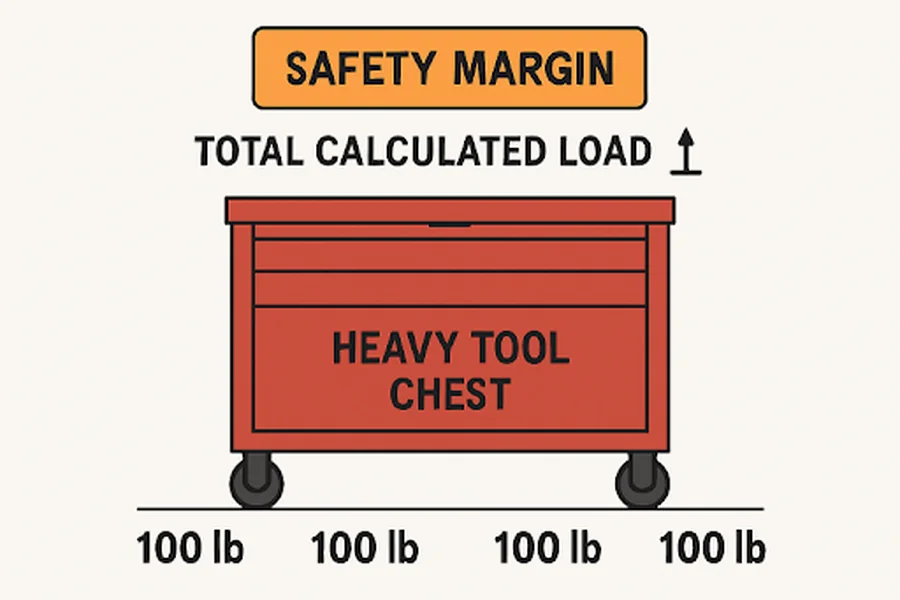
To properly size wheels for your tool chest, calculate its combined weight and contents. Start by weighing the empty chest, then add the cumulative weight of all your tools and accessories. For example, if the empty chest weighs 120 pounds and your tools total 500 pounds, the full load is 620 pounds.
Once you know the total load, divide it by the number of wheels or casters you plan to install. If your chest rolls on four wheels, each wheel should be rated for at least 155 pounds—though best practice suggests exceeding that number for greater reliability.
Factoring in a safety margin is critical for occasional overloading, dynamic forces during movement, and uneven weight distribution. Experts advise adding a 30% safety buffer to your calculated load. So, with a 620-pound chest, you’d collectively size your wheels to support at least 806 pounds. This approach ensures the wheels sustain performance when the tool chest is pushed, turned, or temporarily overloaded, reducing the risk of structural failure.
Choosing the Right Wheel Material
Wheel material directly affects your tool chest’s performance across different floor types and applications. Polyurethane wheels balance strength and floor protection, making them well-suited for workshops and garages with mixed surfaces. Rubber wheels absorb shocks and offer strong traction, especially on rough floors, reducing the risk of skidding. For maximum load-bearing performance, metal wheels deliver durability but can mar delicate flooring and are noisy on hard surfaces.
Consider your workspace. Are your floors smooth concrete, rugged warehouse surfaces, or finished tile? Selecting the right wheel material for your environment ensures a longer wheel life and maintains the integrity of your workspace floor.
Considering Wheel Diameter and Width
Wheel diameter and width are often overlooked, yet they significantly impact how the tool chest moves effortlessly, especially when navigating debris, cracks, or thresholds. Larger diameter wheels reduce rolling resistance, making maneuvering a fully loaded chest easier. In comparison, wider wheels help distribute weight more evenly, reducing wear on both the wheels and the underlying floor. However, always ensure your chosen wheels fit your tool chest’s dimensions and mounting limitations.
If your workspace has a lot of debris or surface transitions, opt for a wheel at least 5 inches in diameter and 1.5-2 inches wide, balancing mobility with stability.
Implementing Braking Mechanisms
Safety in the shop is paramount, especially around heavy, mobile storage units. Integrated braking mechanisms prevent unwanted movement, which is especially important on sloped or uneven work areas. Wheel brakes come in several styles, including face contact, total lock, and side brakes. Ideally, choose casters that feature locking mechanisms for the wheels and the swivel motion, securing the tool chest in place during use.
Many premium casters for tool chests include foot-operated brakes, providing hands-free convenience and added peace of mind when working on projects requiring stationary storage.
Regular Maintenance and Inspection
Even the most robust wheels will degrade over time, especially under heavy loads. Routine inspections help identify worn treads, broken locks, or loose fittings before they develop into safety hazards. Make it a habit to inspect for flat spots, sound irregularities, or visible cracks. Lubricate caster bearings and axles periodically, and replace damaged wheels promptly. Keeping up with this simple maintenance prolongs caster life and ensures your tool chest remains safe and easy to maneuver.
Final Thoughts
Effective tool chest mobility hinges on understanding load requirements, allowing a safety margin, selecting wheels made from suitable materials, and committing to regular inspection. These steps maximize efficiency in your workspace and promote long-term safety for your equipment and your team. With the right approach, you can ensure your tool chest glides smoothly and safely wherever you need it, supporting the demands of even the busiest garage or workshop.
