

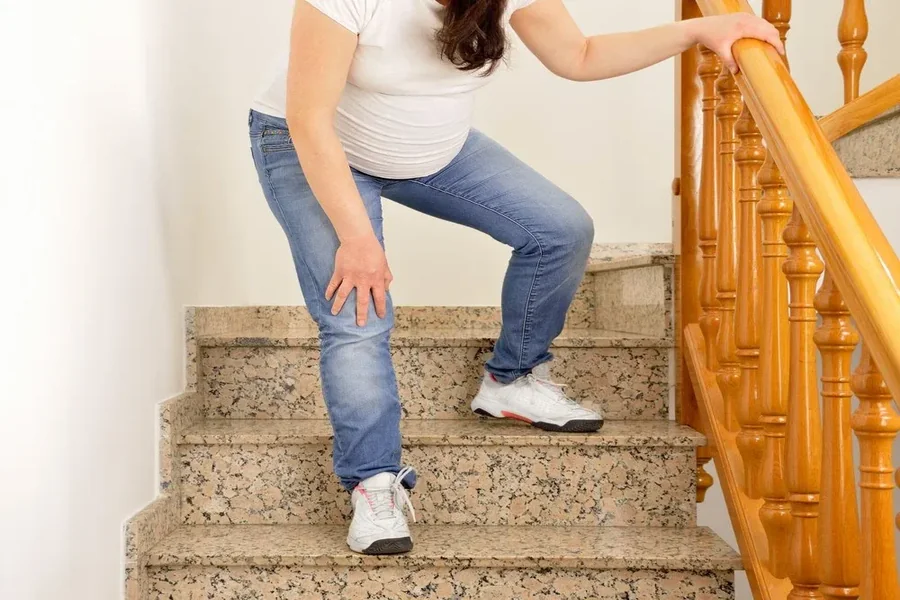
Most of us have been there. You’re carrying a basket of laundry upstairs, or perhaps you’re just heading up to bed after a long day, and suddenly, creak, pop, ouch. That sharp twinge or dull ache in your knee cap makes the flight of stairs look like Mount Everest.
If you find yourself gripping the handrail like your life depends on it, you aren’t alone. Knee pain while climbing stairs is one of the most common complaints physical therapists hear. The good news? There are plenty of ways to get back to moving comfortably.
Let’s break down why this happens and how you can find real relief.
The Science of the Stair Strain
You might walk miles on flat ground without a single peep from your joints, yet one flight of stairs sends you searching for the elevator. Why the discrepancy?
When you climb stairs, your knees bear roughly 3 to 6 times your body weight. This happens because of the patellofemoral joint, a spot where your kneecap (patella) sits in a groove on your thigh bone. As you bend your knee to step up, the pressure in that groove intensifies.
If everything is aligned, your knee handles it effectively. But if there’s a bit of mistracking or inflammation, the stairs become a literal pain.
Common Causes of the Stair Ache
Before we jump into the fixes, it helps to know what might be going on under the surface:
- Runner’s Knee (Patellofemoral Pain Syndrome): Don’t let the name fool you; you don’t have to be a marathoner to get this. It happens when the kneecap doesn’t slide correctly in its groove, causing irritation.
- Osteoarthritis: This is when cartilage wears down over time. It usually hurts like a dull ache that becomes worse in the morning.
- Patellar Tendonitis: Inflammation of the tendon connecting your kneecap to your shinbone, often caused by repetitive jumping or climbing.
- Muscle Imbalances: If your quads are tight and your glutes are sleepy, your knee takes the brunt of the work.
The Knee Cap Factor
When you’re in the middle of a flare-up, you need support, literally. This is where finding the best knee cap for your specific lifestyle comes into play.
A knee support functions as a comfort aid. It provides compression, which helps reduce swelling, and adds a layer of stability that helps your kneecap stay in its proper track as you move.
Tip: Not all supports are created equal. When you are looking for a knee cap for pain relief in India, look for breathable, four-way stretch fabrics that don’t bunch up behind the knee.
Choosing the Right Fit
- Knee cap for men: Often made with a broader fit to suit stronger thigh and calf muscles, ensuring proper support without feeling too tight.
- Knee cap for women: Often features a contoured shape to fit narrower joint structures while providing the same level of compression.
- Best knee cap for pain relief: Look for anatomical knitting. This ensures the sleeve stays put while you’re active, rather than sliding down to your ankles by lunchtime.
Using a knee cap for pain relief is a fantastic active recovery tool. It enables you to keep moving without the fear of a sudden sharp pain, keeping your joints lubricated and your muscles engaged.
3 Simple Lifestyle Shifts for Pain-Free Steps
A brace can give you quick relief, but long-term comfort comes from addressing the root cause. Begin with these three simple changes:
- The “Lead Leg” Technique
Most people lead with their painful knee when going up stairs out of habit, which places the most intense pressure right on the tender joint. A small change in how you move can instantly reduce that strain:
- When Climbing UP: Step up with your stronger or good leg first. This allows the powerful muscles of your healthy leg to do the heavy lifting of pulling your body weight upward.
- When Going Down: Step down with the painful leg first. This might feel counterintuitive, but it reduces the braking force (the eccentric load) that the healthy knee would otherwise have to absorb while lowering you.
- Wake Up Your Glutes
Your knees are often the middlemen, caught between your hips and your ankles. If your glutes (butt muscles) are weak, your knees collapse inward on the stairs. Simple exercises like side steps with a resistance band can take the pressure off your knees almost instantly.
iii. Footwear Matters
Those flimsy flip-flops or worn-out sneakers might be the culprit. If your feet over-pronate (roll inward), it twists the shinbone, which in turn twists the knee. Invest in shoes with decent arch support.
When Should You See a Professional?
We all prefer a quick, at-home fix; however, sometimes your body needs expert care. Consult a healthcare professional if:
- Your knee locks up or feels like it’s going to give way.
- There is visible redness or significant swelling.
- The pain persists even when you are not on the stairs.
Quick Tips for Managing Your Knee Health
| Strategy | Benefit | Recommended For |
| Knee Support | Compression & Stability | Daily activities & flare-ups |
| Glute Strengthening | Takes load off the joint | Long-term prevention |
| Weight Management | Reduces pressure on the patella | Chronic osteoarthritis |
| Proper Footwear | Improves leg alignment | People with flat feet |
Wrapping Up
Knee pain can make you feel like you’re older or less able than you really are. But keep in mind, pain is simply your body’s way of telling you to find a resolution. Whether it’s upgrading your gear with a knee brace, adjusting your stepping technique, or spending five minutes a day strengthening your hips, you have the power to change how you move.
You don’t have to avoid the stairs forever. With the right support and a little bit of patience, you’ll be taking them two at a time again before you know it.
