

Key Takeaways
- Industrial mixing technologies are evolving to meet the demands for precision, efficiency, and sustainability.
- Advancements include intelligent automation, advanced materials, and enhanced hygiene standards.
- These innovations are driven by changing consumer preferences and the need for consistent product quality.
Introduction
Industrial mixing stands as a foundational process across a range of sectors, including food processing, pharmaceuticals, and specialty chemicals. In these industries, consistency and quality are paramount, driving the need for continuous innovation in mixing technologies. As expectations rise and regulations become stricter, advanced solutions such as the ribbon mixer are gaining prominence for their ability to meet evolving production requirements.
Modern manufacturers face not only consumer demands for safer, higher-quality products but also the pressure to operate sustainably and competitively. In response, equipment manufacturers and research teams are collaborating to deliver blending technologies that enhance performance, reduce waste, and maintain the highest hygiene standards. These innovations are creating new opportunities to optimize processes while ensuring products meet regulatory and market expectations.
Adaptation to these new demands means that blending operations must go beyond basic functionality. Manufacturers are now seeking solutions that offer heightened precision and versatility, allowing them to respond to dynamic shifts in product formulations or raw material qualities. This evolution is facilitating better outcomes not just in product uniformity but also in overall operational effectiveness.
With continual advancements, manufacturers are compelled to reassess their mixing infrastructure regularly. The integration of smarter systems paves the way for holistic process improvements while also addressing cost, safety, and sustainability challenges. This environment of ongoing innovation is essential to supporting global industries as they work to meet the needs of today’s connected, competitive markets.
Intelligent Automation and Process Optimization
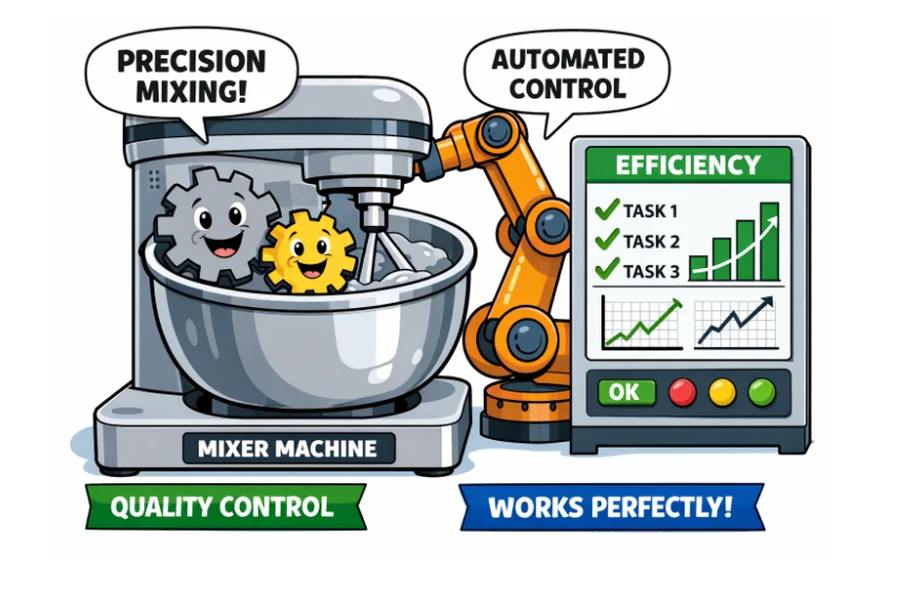
Automation and digitalization are at the forefront of the current revolution in industrial mixing. Modern equipment integrates real-time sensing and control systems designed to monitor key variables such as speed, torque, and temperature. Advanced mixers leverage artificial intelligence (AI) and machine learning algorithms that interpret sensor data and automatically adjust mixing parameters. This capability ensures each batch is blended with high accuracy, minimizing variability and significantly reducing product rework and waste.
For example, facilities using AI-driven process optimization have reported improvements in energy usage and throughput, as systems can react swiftly to variations in material properties or desired product outcomes. Intelligent mixing platforms often include built-in diagnostics that facilitate predictive maintenance, helping operators address potential issues before they escalate, further improving productivity and operational efficiency. The result is a robust, future-ready approach to mixing, as discussed in Forbes reports on AI in manufacturing.
Advanced Materials and Coatings
Breakthroughs in materials science have fundamentally changed the construction of industrial mixers. The adoption of wear-resistant alloys extends equipment lifespans, reducing downtime and replacement costs for manufacturers. Non-stick coatings, such as advanced Teflon variants, help to mitigate issues with product buildup and cross-contamination, supporting both performance and hygiene objectives.
Antimicrobial surfaces have become increasingly prevalent, especially in mixers intended for food and pharmaceutical applications. These surfaces inhibit the growth of bacteria and other pathogens, enhancing safety and supporting compliance with stringent industry regulations. By improving resistance to chemical corrosion and mechanical wear, these innovations add value across the equipment’s lifecycle. More details on the impact of new material technologies in industrial settings are available on ScienceDirect.
Focus on Hygiene and Sanitation
Increasing regulatory scrutiny has made hygiene a top priority in design and maintenance protocols. Modern blending equipment features crevice-free welds, self-draining geometries, and components that are easily removable or clean-in-place (CIP). These design advances streamline cleaning procedures between production runs, reduce labor needs, and minimize the risk of cross-contamination.
Particularly in industries governed by HACCP, FDA, or GMP regulations, maintaining impeccable sanitation standards is crucial. Enhanced attention to sanitary design supports not only compliance but also the overall quality and safety of finished products. The wide adoption of these practices underscores the importance of proactive facility management in safeguarding public health.
Customization and Flexibility
Today’s manufacturing landscape demands high levels of operational flexibility to handle frequent product changes and varying ingredient properties. Customizable mixing solutions can be precisely tailored to the needs of specific applications, whether it involves gentle blending of delicate powders or intensive shear for thick pastes. This adaptability enables manufacturers to optimize output regardless of changing production priorities.
Recent developments include modular mixer designs that can be rapidly reconfigured for diverse processing tasks. Automation further supports quick changeovers and recipe consistency, making it easier for businesses to experiment with new formulations or scale up successful products. The heightened demand for flexible solutions is making bespoke mixer design a mainstream trend across industries.
Energy Efficiency and Sustainability
The industrial blending sector is increasingly focused on reducing energy consumption and environmental impact. Mixer motors and drives are now engineered for high efficiency, consuming less power without sacrificing throughput. Optimized mixing cycles minimize raw material and energy usage, further contributing to operational savings.
Some of the latest equipment incorporates recyclable components and utilizes advanced materials with a lower environmental footprint. Additionally, the collection and analysis of operational data enable facilities to measure and improve their sustainability performance consistently. These efforts support global initiatives toward greener manufacturing and responsible resource use, as discussed by Forbes.
Conclusion
Industrial blending is experiencing a rapid transformation driven by technological advances, stricter regulatory mandates, and shifting consumer expectations. The incorporation of automation, new materials, advanced hygiene, and sustainability initiatives positions manufacturers to achieve the highest standards of quality and efficiency. By staying abreast of these trends, enterprises can maintain a competitive edge in an increasingly dynamic global market.
