

Building a new home is an exciting journey, but it also requires careful planning and coordination of many essential services. From the foundation to the final finishing touches, every step plays an important role in creating a safe, comfortable, and long-lasting home. Missing or rushing any stage can lead to costly problems later. This checklist will help you understand the key services needed for new home construction in a simple and practical way.
Site Preparation and Foundation Work
The first and most important step in any home construction project is preparing the site. This includes clearing the land, leveling the ground, and making sure the soil is strong enough to support the structure. Proper testing is often done to check soil quality and stability.
Once the site is ready, the foundation work begins. A strong foundation is essential because it supports the entire house. Concrete is usually poured to create a solid base that prevents sinking or cracking in the future. Careful attention at this stage ensures the home remains safe and stable for many years.
Plumbing System Installation
Plumbing is one of the core systems in a new home, and it must be planned early during construction. Pipes for water supply and drainage are installed inside walls and under the floors before the structure is fully closed.
Good plumbing design ensures clean water flows properly to kitchens, bathrooms, and laundry areas while waste is safely removed. High-quality materials and correct installation techniques help prevent leaks, blockages, and water damage in the future. Proper testing is also done before moving to the next construction stage.
Electrical System Setup with Electrician
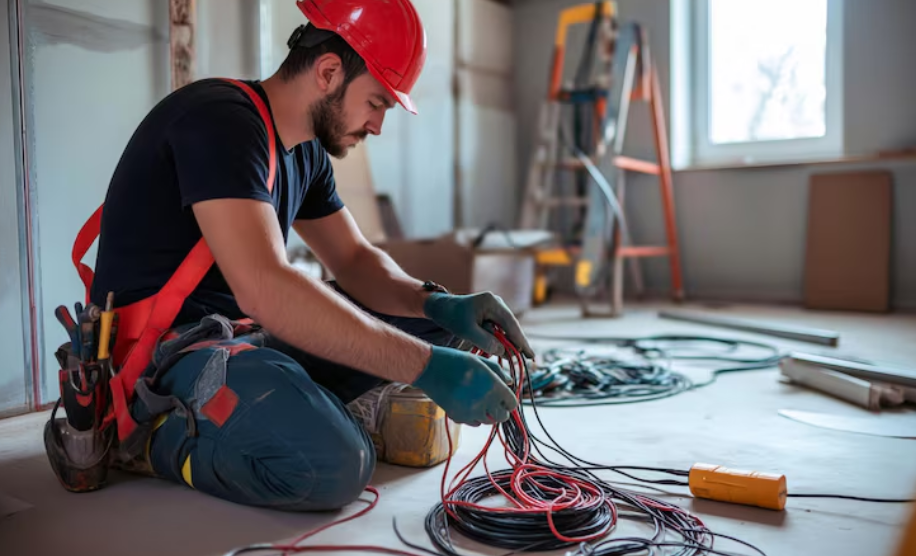
The electrical system is another critical part of home construction and should always be handled by a qualified electrician. During this stage, wiring is installed throughout the house to power lights, appliances, outlets, and safety systems.
An experienced electrician ensures that the wiring layout is safe, efficient, and compliant with building standards. They carefully plan load distribution to avoid overloads and electrical hazards. This includes installing circuit breakers, grounding systems, and main panels that control electricity throughout the home. Proper electrical installation not only ensures convenience but also protects the home from serious safety risks like short circuits or fires.
HVAC and Climate Control Installation
Heating, ventilation, and air conditioning systems are essential for maintaining a comfortable indoor environment. HVAC installation is usually planned during construction so that ducts and vents can be properly placed within walls and ceilings.
A well-designed system ensures balanced airflow, energy efficiency, and consistent temperature control throughout the home. Whether it is cooling during hot summers or heating during cold seasons, a properly installed HVAC system greatly improves comfort and livability.
Interior Finishing and Safety Compliance
Once the main systems are installed, the focus shifts to interior finishing. This includes drywall installation, flooring, painting, cabinetry, and other decorative elements that give the house its final look. Every detail at this stage contributes to the overall style and comfort of the home.
At the same time, safety checks are completed to ensure everything meets building codes and regulations. This includes checking structural integrity, electrical safety, and plumbing performance before the home is ready for occupancy.
Conclusion
New home construction requires careful coordination of many essential services, each playing a key role in the final outcome. From preparing the foundation to installing electrical systems with the help of a skilled electrician, every step must be done with precision and care. When each service is properly managed, the result is a safe, durable, and comfortable home that can last for generations.
