

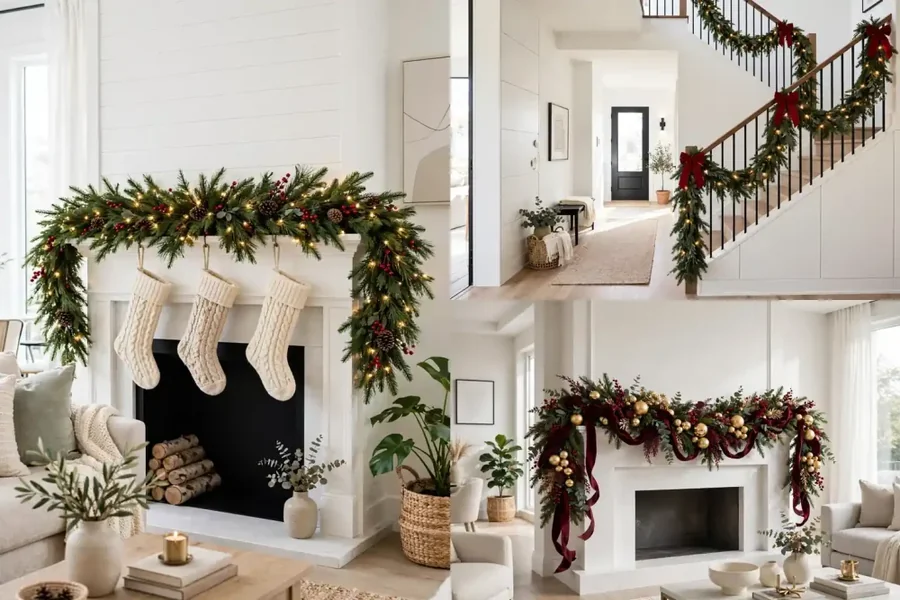
Garland can make a room feel warmer without requiring a full seasonal makeover. A strand of decorative holiday garland can soften a mantel, frame an entryway, or add color to a dining table while allowing the room’s existing furniture and artwork to remain the focus.
The strongest displays feel intentional rather than crowded. Whether the look is natural, traditional, minimal, colorful, or collected over time, garland works best when its scale and texture suit the space around it.
Why Garland Still Works in Modern Homes
Garland is flexible enough to define a surface without permanently changing it. It can outline a mirror, bring softness to a shelf, create a welcoming first impression near a doorway, or add a low layer of texture to a table. Because it is easy to move and adjust, it also gives decorators room to experiment before committing to a finished arrangement.
Rather than treating every room as a separate decorating project, use garland to repeat one material, color, or mood throughout the home. A quiet green strand in the living room, for example, can connect naturally to a similar accent on an entry console or dining table.
Start With the Space, Not the Decoration
Measure the surface before choosing a strand. Note its length, depth, nearby outlets, and the way people move through the area. Check for lamps, fireplaces, candles, radiators, vents, door handles, and cabinet doors that still need to work normally.
Small spaces usually benefit from a lighter touch. A narrow shelf may need only one compact strand and a small supporting object, while a wide mantel or long console can handle more visual weight. Decide early whether the room should feel calm, festive, rustic, playful, or formal, then let that decision guide the palette and materials.
Choose a Style That Fits the Room
- Natural: Soft greens, wood, dried details, and woven textures create an easy, relaxed look.
- Classic: Familiar seasonal colors and symmetrical placement feel polished and traditional.
- Minimal: A single restrained strand with open space around it can make a stronger statement than a crowded display.
- Colorful: Repeat bright accents in small doses so the arrangement still feels organized.
- Collected: Handmade ornaments, inherited details, and pieces already on hand create a personal result with less need to buy new décor.
Room-by-Room Placement Ideas
Living Room
Choose one focal surface, such as a mantel, media console, open shelf, or coffee table. Keep the arrangement low enough to preserve sightlines during conversation. Pair the garland with one larger anchor, such as a mirror, framed print, bowl, or vase, instead of surrounding it with many unrelated objects.
Entryway
Style a narrow console, bench, coat rack, or doorway, but leave hooks, handles, and walking paths easy to use. A single repeated color or texture is often enough to make the entry feel welcoming without making it feel smaller.
Dining Area
Run garland low along the center of the table, leaving room for place settings and serving dishes. Avoid tall decorations that block views across the table. A few low candleholders or small bowls can add height variation without interfering with conversation.
Bedroom
A headboard, dresser, shelf, or window ledge can carry a lighter arrangement. Soft colors and simple textures support a quieter mood. Keep loose pieces away from bedding, heaters, and any open flame.
Kitchen
Use a shelf, breakfast nook, pantry door, or the end of an island rather than food-preparation areas. Select materials that are easy to dust, and keep décor clear of sinks, stovetops, and heat-producing appliances.
Use Scale and Repetition to Create Balance
Proportion matters more than the number of decorations. Long surfaces need either a fuller treatment or a deliberate asymmetrical arrangement. Short shelves often look better with a compact strand and one supporting object. Repeat one color, shape, ribbon, or finish across separate areas to make the home feel connected.
Vary height, but leave pockets of empty space. Step back several feet before deciding whether the display is complete. A design that appears sparse up close may look balanced from the doorway or across the room.
How to Layer Texture Without Making the Room Look Busy
- Place the garland as the base layer.
- Add one larger anchor piece.
- Include two or three smaller accents.
- Remove items that repeat the same shape or compete for attention.
Combine smooth and rough surfaces, such as soft fibers with wood, ceramic, metal, or glass. Texture can add interest when the palette is neutral, while color can bring energy when the materials are similar. If the eye cannot settle on one area, remove an accent before adding another.
Seasonal Styling That Lasts Beyond One Month
Start with neutral tones, simple greenery, natural forms, or soft metallic details that can remain in place after a major holiday. Then add smaller accents that are easy to remove or swap. This approach keeps the overall arrangement useful longer and prevents the room from feeling abruptly empty when one date has passed.
Safety Checks Before Hanging Garland
Keep décor away from fireplaces, radiators, candles, stovetops, vents, smoke alarms, sprinklers, windows, and exits. The National Fire Protection Association advises households to keep candles at least 12 inches away from anything that can burn, which includes greenery, ribbon, fabric, and paper decorations.
Use hooks or fasteners suited to both the surface and the weight of the display. Keep cords flat and out of walkways, and inspect light strands for broken sockets, frayed wires, or other visible damage. The Consumer Product Safety Commission provides guidance on seasonal and decorative lighting products because damaged or improperly made light sets can present shock and fire risks.
Common Styling Mistakes to Avoid
- Using garland that is too short for the intended surface.
- Filling every empty spot with additional decorations.
- Mixing too many strong colors without a repeated element.
- Ignoring the room’s existing focal point, furniture, or lighting.
- Creating trip hazards or placing decorations too close to heat.
A Simple Five-Minute Editing Test
- Take a photo from the doorway.
- Identify the first item that draws the eye.
- Remove one small piece from the arrangement.
- Check that the focal point remains clear.
- Walk through the room and confirm that movement is unobstructed.
Storage and Care Between Seasons
Dust garland before packing it away, separate delicate pieces into layers, and use breathable containers for fabric or felt accents. Label bins by room or season, and store them in a dry location away from extreme heat and moisture. Before the next use, inspect hooks, ties, lights, and wires so the display is ready to hang safely.
Final Checklist for a Polished Display
- Does the arrangement suit the room’s size?
- Is there one clear focal point?
- Can people move through the room safely?
- Do the colors support the existing décor?
- Is there enough open space around the display?
- Can small details be adjusted as the season changes?
Conclusion
Garland looks most at home when it feels like part of the room instead of an object placed on top of it. Thoughtful scale, a limited color plan, varied texture, and a little empty space can create seasonal warmth in nearly any setting while keeping the result practical, balanced, and easy to refresh.
