

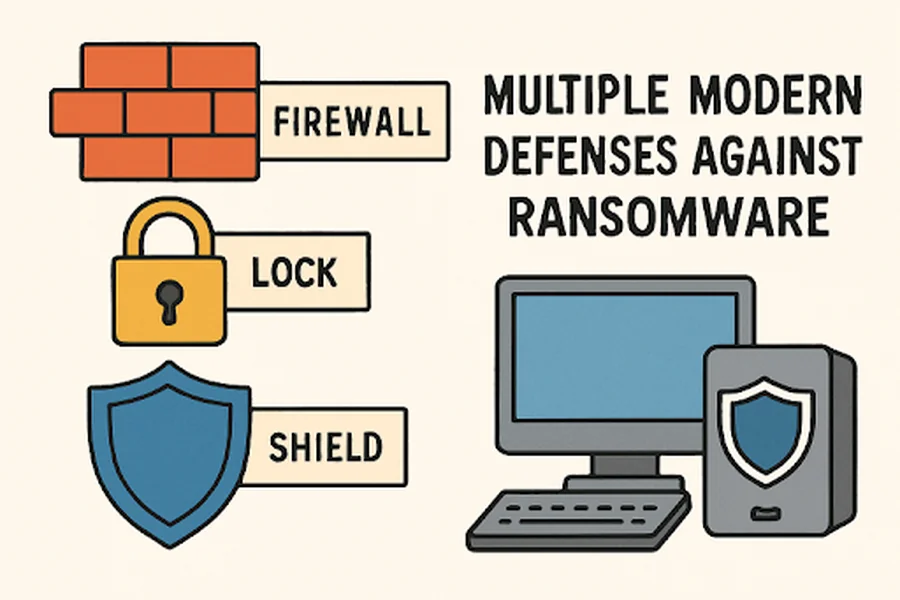
Ransomware attacks continue to pose grave threats to global organizations, growing in complexity and effectiveness every year. Modern defense strategies are essential for staying ahead, demanding a combination of innovative technologies and a vigilant, informed workforce. As organizations develop comprehensive security plans, methods such as ransomware data recovery must be top of mind to ensure resilience and business continuity after attacks.
Cybercriminals are constantly refining their tactics, often outpacing traditional security tools and reactive approaches. To effectively defend digital assets, businesses now need to focus on layered security, rapid threat detection, and proactive defense measures that minimize the damage from sophisticated ransomware campaigns. Modern approaches protect both data and operations, safeguarding reputations and customer trust.
Employees continue to play a critical frontline role, as ransomware commonly infiltrates networks by exploiting human error. For comprehensive defense, combining resilient technical controls with robust human awareness training is imperative. As remote and hybrid workforces expand, ensuring secure access to sensitive data and enforcing strict security policies have never been more important. Organizations must also be prepared to restore operations quickly if attacked. This is why strategies such as isolating backups, leveraging managed detection and response services, and participating in industry threat-sharing initiatives have become vital elements of modern cyber resilience.
Adopting a Zero Trust Architecture
The Zero Trust model treats every user and device as a potential threat, continually verifying credentials and device health before granting access. By adopting Zero Trust, organizations prevent ransomware from spreading, even when attackers breach a single segment of their network. This model enforces least-privilege access and micro-segmentation, key elements for isolating critical data and applications. Zero Trust also ensures enhanced controls for remote work, protecting distributed endpoints and minimizing intervention costs after an incident. This architecture is now an industry standard, endorsed by authorities such as the U.S. Cybersecurity and Infrastructure Security Agency (CISA) and leading security organizations.
Enhancing Employee Training and Awareness
Employee behavior remains one of the most significant risk vectors for ransomware. Regular, interactive cybersecurity training strengthens an organization’s human firewall. Real-world phishing simulations and attack-scenario exercises help employees spot malicious links and suspicious email attachments, thereby reducing successful attack rates. According to recent industry reports, organizations investing in ongoing cyber education can reduce the risk of ransomware incidents by as much as 75% over time.
Leveraging Advanced Analytics and AI
Today’s security operations benefit greatly from artificial intelligence and machine learning. These solutions monitor network traffic and system behaviors 24/7, instantly flagging deviations that could indicate ransomware in progress. By quickly correlating data across endpoints and detecting suspicious actions—such as unauthorized file encryption—AI-powered tools empower security teams to respond before widespread damage occurs. In fact, advanced analytics make threat detection and containment substantially faster and more precise, drastically reducing attackers’ average dwell time.
Maintaining Secure, Offline Backups
Well-maintained offline backups are crucial for mitigating the devastating impact of ransomware. Organizations should follow the 3-2-1 rule: keep three copies of data, stored on two different media, with at least one copy kept offsite and completely offline. Isolating backups from the main network prevents ransomware from encrypting the backups themselves, enabling straightforward recovery and eliminating the need to negotiate with perpetrators.
Implementing Network Segmentation
Segmenting networks is a highly effective way to contain malware outbreaks. By dividing large networks into smaller, firewalled segments, organizations ensure that even if attackers infiltrate one zone, their movement and reach are severely limited. This approach is particularly important for enterprises with large, complex infrastructures where complete network compromise could otherwise have catastrophic consequences.
Utilizing Endpoint Detection and Response (EDR) Systems
EDR platforms play a foundational role in rapid threat discovery and response. These solutions continuously monitor endpoints, detect anomalous or potentially malicious behavior, and provide automated or orchestrated responses, such as quarantining compromised devices. By leveraging behavioral analytics and threat-hunting capabilities in EDR, organizations can proactively detect and neutralize ransomware before critical systems are impacted.
Collaborating with Industry Partners
No organization should stand alone against ransomware. Active participation in industry threat intelligence-sharing groups enables companies to learn from real-world incidents, exchange defense strategies, and warn one another about emerging ransomware campaigns. Sharing anonymized attack data and lessons learned helps raise the security posture for the wider ecosystem. This collective defense model is supported by organizations such as the Cyber Threat Alliance and Information Sharing and Analysis Centers (ISACs).
Conclusion
Successfully defending against ransomware requires a cohesive security strategy that incorporates Zero Trust principles, advanced detection technologies, and well-practiced recovery processes. Equipping employees with regular training, maintaining robust offline backups, and engaging in industry collaboration dramatically improve an organization’s ability to withstand and recover from ransomware attacks. Investing in these modern defense measures not only protects digital assets but also preserves customer trust and business continuity in an ever-evolving threat landscape.
