

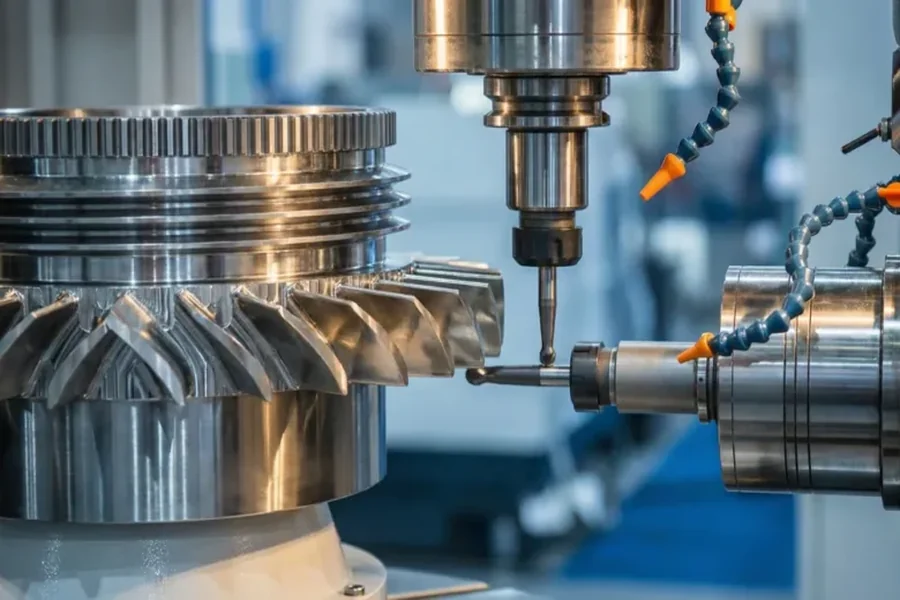
From industrial maintenance to custom equipment and product development, organizations in Dallas, Texas often need parts that match a specific drawing, assembly, or operating condition. Understanding the route from a CAD model to a finished component helps teams communicate more clearly with machining providers and make better decisions before metal is cut. Resources like the CNC machine shop in the Dallas area can guide this process.
CNC machining is a subtractive process. A machine removes material from stock, such as plate, bar, or billet, until the remaining shape matches programmed instructions. It can be used for prototypes, replacement components, and repeat production when a part requires controlled dimensions and repeatable features.
What CNC Machining Does
CNC means computer numerical control. A programmed sequence directs the motion of cutting tools, the workpiece, or both. Compared with manual machining, CNC equipment can repeat the same programmed movements across multiple parts. Unlike additive manufacturing, which builds material layer by layer, machining begins with solid stock and removes what is not needed.
From Digital Design to Finished Part
The workflow starts with a CAD model containing dimensions, holes, surfaces, and other required features. Before programming, the design should be reviewed for tool access, wall thickness, internal corners, and assembly relationships. This step is especially important when a component will operate in demanding conditions in North Texas, such as heat, vibration, or outdoor exposure.
For projects that involve milling, turning, drilling, or related operations, CNC machining planning usually includes selecting tools, creating CAM toolpaths, generating machine-specific code, securing the raw material, setting offsets, and running a first piece. Measurements from that first part can confirm that the program and setup produce the intended result before additional parts are made. More information about CNC machining capabilities can help teams understand process options.
Common CNC Machine Types
- CNC mills cut pockets, slots, faces, holes, and shaped surfaces with rotating tools.
- CNC lathes rotate the workpiece and are well-suited to shafts, bushings, pins, and other round parts.
- Turning centers may combine turning with drilling, tapping, and limited milling.
- Three-axis machines handle many parts with features accessible from the top and sides.
- Four- and five-axis machines can reach angled or complex features with fewer repositioning steps.
Choosing the Right Material
Material selection should occur before the design is finalized. Aluminum is often chosen when low weight and machinability are important. Steel provides strength and durability, while stainless steel can be useful where corrosion resistance is important. Brass, copper, titanium, and engineering plastics each serve different needs involving conductivity, wear, weight, temperature, or chemical exposure.
The best choice is not always the least expensive raw stock. Machinability, finishing needs, part life, availability, and the consequences of failure all affect total project cost. Drawings should identify the required grade or specification rather than relying on a general material name alone.
Design Checks That Prevent Problems
A simple-looking bracket can become difficult to make if it combines thin walls, deep pockets, sharp internal corners, and tight requirements on several faces. Designers can prevent many issues by using inside radii that suit cutting tools, avoiding unnecessarily deep features, choosing standard hole and thread sizes, and marking only truly critical dimensions with tight tolerances.
A complete drawing should also identify datums, material, finish, thread information, and inspection requirements. These details establish what the part must do, not merely what it should resemble on screen.
Tolerances, Surface Finish, and Inspection
Accuracy includes more than a length or diameter. It can involve position, flatness, parallelism, roundness, and surface texture. Tighter requirements generally require more careful setup, machining time, and inspection. Reliable measurement depends on appropriate tools, from calipers and micrometers to height gauges and coordinate measuring machines.
Measurements should be traceable to consistent units and references. The standard units of length used in technical work provide a common basis when drawings, models, and inspection records must agree. Tool wear, heat, vibration, and weak fixturing can all affect the final result.
What Affects CNC Machining Cost
- Material type, stock size, and availability.
- Programming complexity and required toolpaths.
- The number of setups and fixtures needed to reach all features.
- Cycle time, specialized tooling, and finishing operations.
- Quantity, because setup effort can be distributed across more parts.
- Inspection reports, testing, and documentation requirements.
Ways to Reduce Material Waste
Waste reduction begins with selecting stock that closely matches the finished dimensions and planning layouts before cutting the plate or sheet. CAM simulation can reveal collisions or inefficient toolpaths before the machine runs. Tracking why scrap occurs, whether from programming, material defects, setup errors, or measurement issues, supports practical process improvements without compromising safety or part performance.
CNC Machining Priorities
Current shop-floor priorities include connected machine data, tool-condition monitoring, improved simulation, and automation for repetitive handling tasks. Five-axis equipment and hybrid additive-subtractive approaches may also be appropriate for certain geometries. These tools do not replace careful process planning. Skilled operators, programmers, and inspectors remain essential for verifying that a part meets its requirements.
Common Questions About CNC Machining
What is the difference between CNC milling and CNC turning?
Milling typically uses a rotating tool to cut a secured workpiece. Turning rotates the workpiece against a cutting tool. Milling suits many flat and complex forms, while turning is commonly used for cylindrical features.
Is CNC machining only for large production runs?
No. It can be used for one-off repairs, prototypes, small batches, and larger orders. Geometry, material, tolerance, timing, and quantity determine whether the process is suitable.
Why do some parts require multiple setups?
One fixture position may not expose every required surface to the tool. Additional setups provide access to other faces, although they can add handling time and alignment considerations.
Final Thoughts
A successful CNC project connects design, material selection, programming, setup, cutting, and inspection. For Dallas, Texas teams, resolving design questions early can help create parts that are easier to machine, easier to inspect, and better suited to their intended use.
