

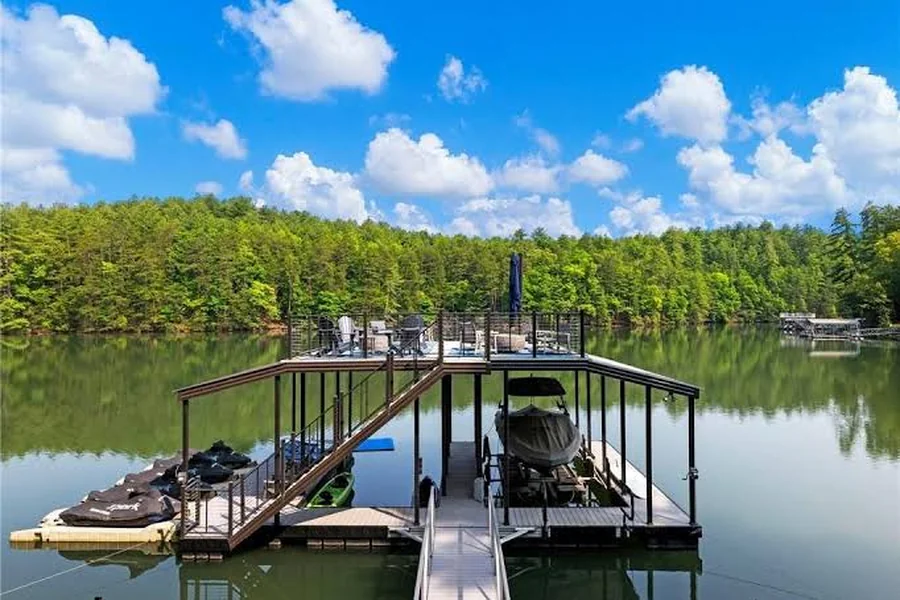
A twenty-foot bowrider and a forty-foot cruiser can share a lake and still need totally different setups at the shoreline. Length, beam, and weight all change how a dock should be shaped and built. Getting that match right keeps boarding easy and docking stress-free.
Why Length and Beam Set the Slip Size
Slip dimensions start with the boat, not the dock. A common rule adds a few feet to the boat’s length and about two feet to its beam, which leaves space for fenders, lines, and a person walking alongside. Tight slips scrape hulls on windy days, while oversized ones let the boat swing and bang against the frame.
Height above the water counts too. Tall pontoons, sailboats with deep keels, and boats with swim platforms all sit differently against a deck. Measuring the boat at its widest point, including rub rails and accessories, gives designers the real number to build around. Shoppers browsing aluminum boat docks for sale can save time by listing these measurements before asking for quotes.
Weight, Wind, and What Happens When Boats Get Bigger
Heavier boats load a dock in ways many owners overlook. A boat parked beside a walkway presses on the floats under that spot, so larger vessels call for extra buoyancy and a stiffer frame. An aluminum floating dock handles this well when float spacing follows the weight instead of a standard grid.
Wind adds a second force. Tall boats act like sails, and the pull travels through cleats and into the anchors. Sites with open water need heavier hardware and more anchoring than calm coves, even for the same boat. Planning for the biggest vessel an owner might buy in the next few years avoids expensive upgrades later.
Choosing Between Straight, L, T, and U Layouts
Layout shapes how people and boats move around the dock. Straight walkways reach deep water quickly and cost the least. L and T shapes give a protected side for tying up, plus a platform for lounging or fishing. U configurations cradle a boat on three sides, which makes loading easier and shelters the hull from wakes.
Water depth and shoreline shape also guide the choice. Shallow shores may need a long approach before a slip makes sense, and cove-shaped lots can fit a compact U where a straight pier would waste space. Setback rules from neighboring property lines sometimes limit what fits, so checking local limits keeps a layout from being rejected after the design is done.
How Do Marinas and Rental Businesses Plan for Mixed Fleets?
Commercial docks rarely serve one boat type. A rental business might host jet skis, pontoons, and fishing boats on the same dock, and each needs its own slip width and tie-up style. Mixed layouts use finger piers of different lengths, wider main walkways for carts, and open platforms for loading passengers.
Flexibility pays off here. Modular aluminum docks let operators reconfigure slips as demand shifts, adding larger berths during peak season or trimming them later. Owners comparing aluminum docks for sale should ask how sections connect and whether they can be rearranged without special equipment. Income depends on keeping slips usable, so a layout that adapts to the next boat in line earns more over time.
Walkways, Access, and Safety Around the Boat
Moving around a boat matters as much as parking it. Main walkways usually run at least four feet wide, and wider paths help when carrying coolers, helping children, or pushing a cart. Gangways need a gentle slope at low water, since steep ramps get slippery and tough for anyone with limited mobility.
Cleats, bumpers, and ladders belong where people actually step. Lighting along the walkway and slip helps with night returns, and nonslip decking cuts the risk of falls. Good floating dock builders plan these details together with the slip, so the boat, the deck, and the person climbing aboard all fit comfortably.
Matching a dock to the boat is easier with someone who builds these systems every day, and Flotation Systems handles that for homeowners, marinas, and resorts. The team starts with boat dimensions, water conditions, and the way the space will be used, then designs custom aluminum boat docks to suit. Sharing the make, length, and beam of the boat along with a few shoreline photos gives them what they need to sketch a workable layout.
