

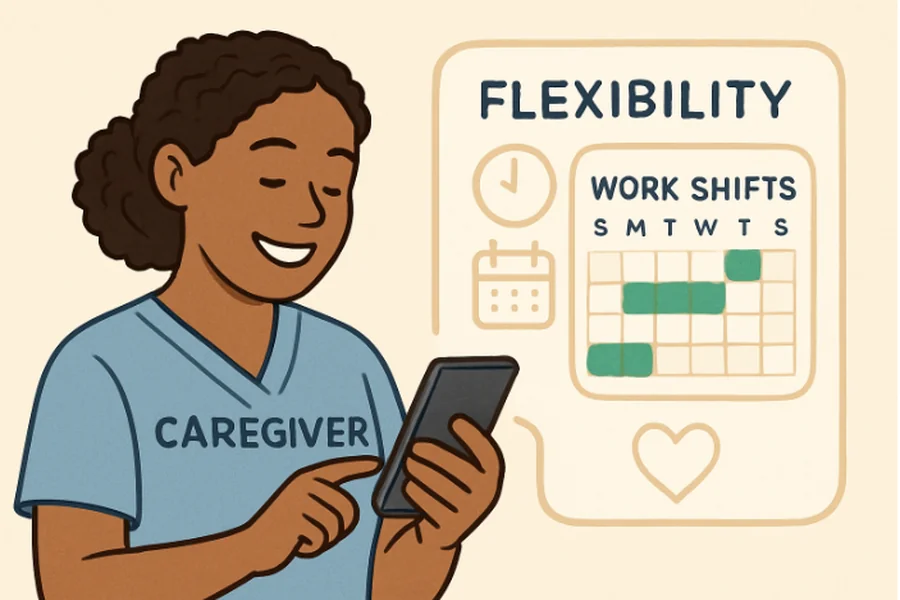
Flexible scheduling is rapidly transforming the caregiving landscape, enabling caregivers to take control of their schedules and achieve a better balance between their professional and personal lives. This transformation is not just revolutionizing the work environment for caregivers—it is also elevating the level of care patients receive and helping agencies address persistent staffing challenges. As this trend gains traction, an increasing number of organizations are adopting innovative approaches to scheduling. See job postings for new opportunities that align with your lifestyle and schedule preferences.
Healthcare leaders are recognizing that flexible scheduling can help mitigate burnout, reduce turnover, and enhance job satisfaction—a crucial step forward in addressing workforce shortages. This move towards heightened flexibility underscores a broader commitment to supporting the caregiving workforce and improving patient outcomes through more adaptable work arrangements. By leveraging technology, agencies now have effective tools that enable caregivers to design their own schedules seamlessly while maintaining continuity of care for those who depend on them the most.
As the demands of modern life increase, the push for greater autonomy in work hours is shaping the future of caregiving careers. It is becoming clear that flexibility is not just a perk but an essential element for both attracting and retaining skilled professionals. Notably, flexible scheduling also ensures that agencies are better equipped to provide uninterrupted patient care, even during periods of high demand or unforeseen staff shortages.
The increasing role of artificial intelligence (AI) and user-friendly mobile platforms means caregivers now have more independence than ever before. These advancements dramatically streamline shift management, simplify communication, and support personal well-being—all while safeguarding the standard of care delivered to patients.
The Rise of Flexible Scheduling in Caregiving
Flexible scheduling is no longer an emerging idea—it’s quickly becoming the norm across the caregiving industry. According to a survey by the Society for Human Resource Management (SHRM), nearly all healthcare organizations plan to ramp up their efforts to offer flexible working options to their staff over the next year. This strategic pivot is designed to combat two critical challenges: widespread caregiver burnout and chronic staffing shortages.
As job seekers increasingly expect flexibility, agencies that do not adapt risk being left behind. Competitive job markets have made flexible scheduling a key differentiator for organizations seeking to attract committed and qualified caregiving professionals. Industry experts predict that this shift will continue to reshape the workforce, highlighting the sector’s responsiveness to both employee well-being and evolving care needs.
Technological Advancements Facilitating Flexibility
Thanks to ongoing innovation in digital technologies, managing and customizing schedules is easier than ever for both caregivers and administrators. AI-powered platforms enable caregivers to select and choose their shifts based on their personal routines, resulting in significant time savings for schedulers and increased overall agency productivity. Mobile apps and cloud-based scheduling solutions have become the norm, offering instant notifications for available shifts, facilitating communication, and enabling seamless shift swaps among staff members.
The integration of these digital tools is not only modernizing back-end processes but also actively reducing administrative burdens. Automated scheduling capabilities enable team leaders to focus on mentoring and strategic planning, thereby boosting morale and improving resource allocation across the organization.
Benefits for Caregivers and Patients
- Improved Work-Life Balance: With flexible scheduling, caregivers can accommodate personal responsibilities, decrease stress levels, and avoid burnout—a growing concern in the industry.
- Enhanced Job Satisfaction: The increased autonomy and participation in schedule creation lead to greater job satisfaction and higher motivation among staff.
- Better Patient Care: Cross-industry studies, such as those cited by the New York Times, show that happier, less stressed caregivers deliver better patient outcomes and build stronger relationships with those in their care.
Organizational Advantages of Flexible Scheduling
- Reduced Turnover: Agencies offering flexible scheduling arrangements consistently report up to 15% lower turnover than those with rigid, traditional rosters.
- Increased Shift Coverage: Automated marketplaces and shift-swapping systems ensure gaps are filled quickly and efficiently, minimizing the impact of last-minute absences or emerging patient needs.
- Operational Efficiency: AI-driven scheduling systems reduce person-hours being spent on administrative planning by up to 25%, freeing managers to focus on continuous improvement and team development.
Challenges and Considerations
- Coordination Complexity: Juggling varying shifts and schedule preferences can lead to coordination headaches if not managed by robust systems and effective communication protocols.
- Equity Concerns: Ensuring all caregivers have fair access to desirable shifts is a complex but important task to maintain workplace harmony.
- Training Needs: To fully leverage advanced scheduling technology, ongoing training and technical support must be prioritized to ease adoption and ensure successful outcomes for the entire team.
Future Outlook
The movement toward flexible scheduling in caregiving is expected to gain significant momentum as younger, tech-savvy workers enter the profession and digital technology becomes increasingly integrated into day-to-day operations. Progressive organizations that embrace and implement this model are well-positioned to attract, engage, and retain the most qualified and motivated staff, ultimately resulting in superior patient care, stronger team cohesion, and enhanced overall job satisfaction for caregivers. As digital solutions, such as scheduling apps, remote monitoring tools, and telehealth platforms, continue to evolve and streamline workflows, the sector is likely to see further gains in operational efficiency, employee retention, and overall care quality. These advancements underscore the growing importance of flexibility as a cornerstone of modern caregiving careers, shaping a workforce that is more adaptable, resilient, and capable of meeting the diverse needs of patients and families in today’s healthcare environment.
