

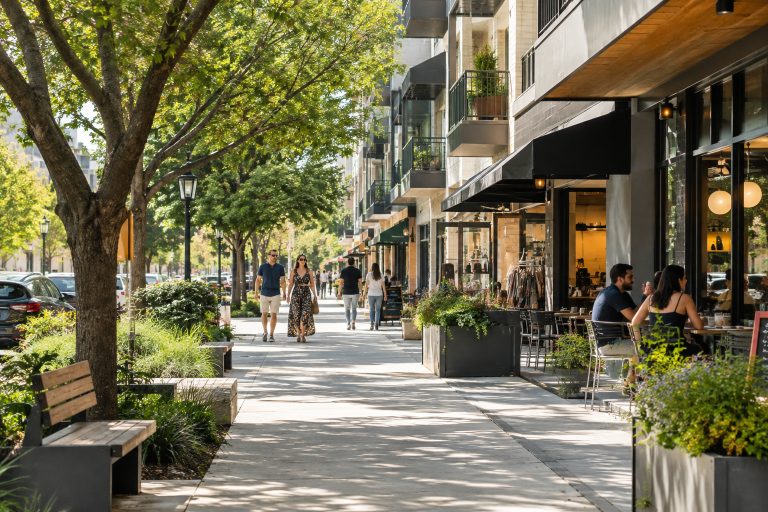
Livability is about how easily people can move through ordinary life. In Austin, that means being able to reach coffee, groceries, parks, childcare, work, and neighbors without every errand becoming a long drive. A well-planned mixed-use district can make those routines simpler while giving an area more energy throughout the day.
Planning requires a clear understanding of the market, the neighborhood, and the experience people want from a place. Austin real estate development group Den Property Group approaches development work through market intelligence, design guidance, product strategy, sales, and marketing support. Based in downtown Austin and experienced with multifamily and mixed-use projects, the firm’s development approach reflects why the strongest Central Texas projects begin with more than a building concept. They begin with a practical vision for how people will live, gather, and use the area over time.
Why Livability Matters More Than Square Footage
A large project is not automatically a livable one. A development may have impressive architecture, upscale finishes, and substantial square footage, yet still feel disconnected if residents must drive elsewhere for basic needs or if public areas are uncomfortable to use. Livability includes convenience, safety, comfort, access, and a sense that a neighborhood supports real life rather than only occasional visits.
Mixed-use development combines complementary uses in one building, block, or larger district. It can include apartments or condominiums, offices, restaurants, neighborhood retail, parks, civic facilities, and gathering spaces. In a vertical project, homes may sit above shops. In a master-planned district, several buildings, streets, and open spaces work together. The format matters less than whether the uses are connected in a useful way.
Walkability Must Work in Austin’s Climate
Walkability does not require residents to give up their cars. It gives people a realistic choice to walk when the trip is short. In Austin, sidewalks need continuous routes, safe crossings, lighting, benches, street trees, and, where possible, shade. A route that looks walkable on a site plan can fail in practice if it forces pedestrians across wide driveways, leaves them exposed to afternoon heat, or places entrances far apart.
Good street design also helps local businesses. A café, pharmacy, fitness studio, salon, small market, or childcare provider benefits from being easy to see and easy to reach. Smaller storefronts can create a more active street edge than a single blank facade. The tenant mix should serve both everyday needs and occasional social outings, rather than relying only on destination restaurants.
Housing Choice Supports a More Complete Neighborhood
Austin needs neighborhoods that can accommodate people at different stages of life. Apartments, condominiums, townhomes, and smaller homes can serve students, young professionals, families, older adults, and people who want to remain near established friends or services. Variety also gives households more options as their needs change.
Adding units alone does not ensure affordability. Land costs, construction costs, financing, local regulations, and household incomes all influence home prices. Still, housing decisions should be made alongside plans for utilities, drainage, schools, roads, emergency access, and other public services. A responsible project considers those systems early, not after traffic or capacity issues become visible.
Public Space Should Earn Regular Use
Useful public space is more than decorative landscaping between buildings. In Austin, a plaza or lawn should offer shade, seating, clear access, and reasons to return. Play areas, flexible lawns, outdoor dining, dog-friendly spaces, trail connections, and small event areas can make a space part of neighborhood life. Durable materials and a realistic maintenance plan are equally important.
The best spaces accommodate both quiet and active use. Someone should be able to sit with a laptop in the morning, meet a friend after work, or attend a small community event on a weekend. When a public area is visible, comfortable, and connected to surrounding sidewalks, it can help a development feel like a place rather than a collection of separate properties.
Transportation and Parking Need an Early Plan
Traffic planning cannot be treated as a final approval-stage exercise. Mixed-use districts have changing patterns throughout the day: residents may park overnight, office users arrive in the morning, restaurants become busiest later, and event activity can create temporary demand. Connected streets, safe drop-off zones, bicycle facilities, transit access, rideshare areas, and structured parking can help manage those overlapping needs.
Large surface parking fields often make walking less pleasant and intensify heat around a site. Parking remains necessary in many Austin locations, but its layout should not undermine the walkable experience the project promises. The right solution depends on surrounding transit, street connections, local travel habits, and the actual mix of uses.
Texas Projects Offer Useful Lessons
Recent projects elsewhere in Texas show why local conditions should shape the plan. In North Texas, a recently approved Arlington redevelopment is designed to replace a large downtown surface parking area with housing, office space, restaurant and retail space, structured parking, public infrastructure, and city facilities. Its public-private structure illustrates how a project can combine private activity with the creation of long-term public assets.
In College Station, South College Station development agreements point to a different model, one organized around regional retail, hospitality, recreation, restaurants, and a plaza for gatherings. Neither example should be copied directly in Austin. Each responds to its own market, infrastructure, and surrounding activity. That is the central lesson for any mixed-use proposal.
Design Quality and Community Input Protect Long-Term Value
Renderings can be persuasive, but residents should look beyond them. Ask how buildings meet the sidewalk, whether materials will age well, where shade will fall, how loading and trash are handled, and whether the project connects naturally to nearby blocks. Strong design respects local character while remaining durable enough for frequent use and changing tenants.
Community input improves a project when it begins early and remains specific. Neighbors often identify practical concerns about cut-through traffic, noise, drainage, construction timing, school capacity, parking, and unsafe crossings. Clear meetings, accessible updates, and direct responses to those concerns create a better process than vague promises of engagement.
A Simple Checklist for Austin Residents
- Can residents reach daily services without a long drive?
- Are sidewalks connected, shaded, safe, and accessible?
- Does the project offer more than one type of housing?
- Will public spaces be comfortable during Austin’s hotter months?
- Does the plan address traffic, parking, utilities, drainage, and maintenance?
- Will nearby businesses have consistent customer access?
- Has the surrounding community had meaningful opportunities to participate?
Building Places for Daily Life
Mixed-use development can help Austin grow in a more connected way, but only when its pieces reinforce one another. Homes need nearby services. Shops need customers and comfortable streets. Public spaces need shade, programming, and upkeep. Transportation plans need to reflect real travel patterns. When those details are planned together, a development can add more than buildings. It can create a useful, resilient place for everyday life.
