

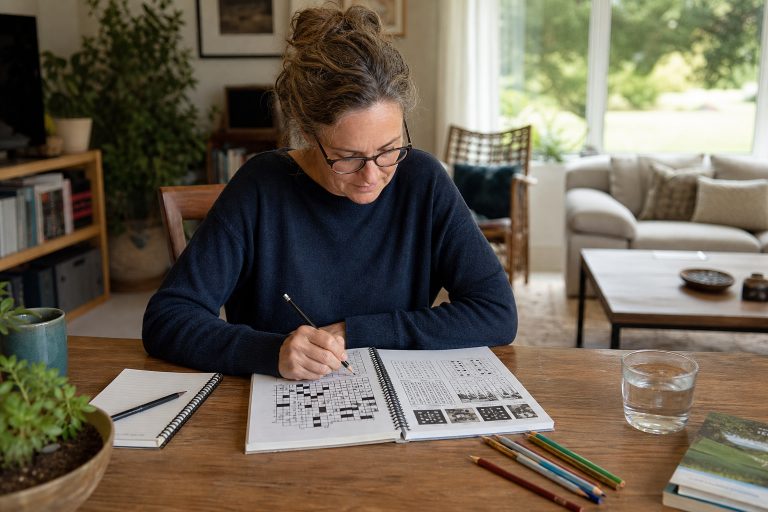
A good puzzle routine is less about solving everything quickly and more about returning to an enjoyable challenge often enough to build familiarity. For a ready-made mix of formats that can help you vary your sessions, check here for puzzle options that prevent the same activity from becoming repetitive.
The best plan is flexible. Some days may call for a five-minute word search, while others may leave room for a longer logic grid or a challenging number puzzle. By choosing several styles and adjusting difficulty as you improve, you can make puzzles a dependable hobby rather than another item on a demanding to-do list.
Why A Balanced Puzzle Routine Works Better
Repeated practice helps solvers become more comfortable with the rules, clue styles, and common patterns of a particular format. A crossword regular may get faster at recognizing wordplay, while someone who enjoys Sudoku may become more confident with elimination and candidate tracking. Those gains are useful, but they are often most noticeable in closely related tasks.
Variety adds a different kind of value. Switching from language clues to visual matching or numerical patterns changes the way you approach the page, which can make a routine feel fresher. The broad range of puzzle genres gives you many ways to build that variety without needing to abandon your favorite format.
It is also wise to keep expectations realistic. Puzzles can be a satisfying recreation and a chance to practice attention, recall, and reasoning strategies. They should not be treated as a guaranteed remedy for memory concerns or as proof that a single activity will improve every kind of thinking.
Choose Puzzle Types With Different Demands
A balanced routine can include several categories, each with its own appeal:
- Word puzzles: Crosswords, anagrams, and word searches draw on vocabulary, spelling, and clue interpretation.
- Logic puzzles: Grid puzzles, deduction challenges, and sequencing problems reward careful elimination and note-taking.
- Number puzzles: Sudoku, Kakuro, and number-placement games emphasize patterns, constraints, and orderly steps.
- Visual puzzles: Spot-the-difference pages, mazes, jigsaws, and picture logic puzzles use scanning and spatial awareness.
- Memory puzzles: Matching games and recall challenges encourage close attention to details.
- Mixed puzzles: Variety collections introduce surprise, which is useful when your usual choices start to feel automatic.
Build A Simple Weekly Puzzle Plan
Start with 10 to 20 minutes per session, then adjust based on enjoyment and available time. A straightforward weekly rhythm might look like this:
- Monday: Complete a short word puzzle as an easy start to the week.
- Tuesday: Try a logic or deduction puzzle that rewards slow, careful reading.
- Wednesday: Work through a number or pattern challenge.
- Thursday: Choose a visual or spatial puzzle, such as a maze or picture match.
- Friday: Return to a familiar favorite for a low-pressure session.
- Weekend: Set aside extra time for one longer puzzle, without making speed the goal.
Match Difficulty To The Right Challenge Level
The right puzzle asks for effort but still gives you a path forward. If you solve every page without thinking, increase the difficulty or try an unfamiliar format. If you regularly feel stuck before making any progress, step back to an easier level and learn the basic conventions first.
A practical approach is to move up one level after several comfortable solves. Keep one harder puzzle available for occasional attempts, but do not let it dominate the routine. Hints are useful, too. A well-timed hint can reveal a method you can apply independently next time.
Use A Three-Step Solving Method
- Scan: Read the whole puzzle and begin with clues, entries, or patterns that stand out.
- Sort: Separate what you know from what is only possible, using pencil marks or notes when helpful.
- Switch: Leave a stubborn clue temporarily and return after working elsewhere.
For example, a solver might leave an unclear crossword clue, complete several crossing answers, and then return with enough letters to see the answer immediately. Switching is not giving up. It is a way to stop one obstacle from consuming the entire session.
Know When To Take A Break
Repeated errors, rereading the same clue, or rising irritation are useful signs that a pause may help. Stand up, stretch, get water, look away from the screen, or switch to a different puzzle type. Ending after a satisfying small success can also make it easier to return tomorrow.
Paper puzzles can be especially appealing when you want fewer notifications and a slower pace. Digital puzzles can be equally useful when you prefer adjustable settings, built-in hints, or quick access during a short break.
Track Progress Without Turning It Into A Contest
Use a simple notebook or phone note to record four details after each session:
- The puzzle type
- The difficulty level
- The time spent
- What caused trouble, such as vocabulary, distractions, or a missed rule
Progress may show up as fewer hints, cleaner notes, better accuracy, or greater comfort with a new format. Faster completion is only one possible measure, and it is not always the most meaningful one.
Make Puzzle Solving More Social
Puzzles do not have to be solitary. Compare completed answers with a friend, collaborate on a difficult page while sharing the work, or create a relaxed family puzzle hour with several difficulty options. The goal should be conversation and shared problem-solving, not letting the fastest person take over.
A broader routine still matters. The National Institute on Aging notes that physical activity, meaningful engagement, and social connection are among the factors considered in cognitive health research. A puzzle habit fits best alongside those everyday foundations.
Common Mistakes To Avoid
- Choosing puzzles that are always too easy.
- Using only one format for months at a time.
- Defining success only by speed.
- Pushing through repeated mistakes without taking a break.
- Comparing your results with someone else’s routine.
- Expecting puzzles to replace healthy routines or professional support when it is needed.
Frequently Asked Questions
How Often Should Someone Solve Puzzles?
A few short sessions each week can create a steady habit. Choose a frequency that fits your schedule and feels enjoyable enough to maintain.
Should Beginners Start With Easy Puzzles?
Yes. Easier puzzles help beginners understand common rules and build confidence before moving on to more demanding formats.
Is Paper Or Screen Better?
Both can work well. Paper offers a tactile, quieter experience, while screens can provide convenience, timers, and optional hints.
What Should You Do When You Feel Stuck?
Review the simplest clues, check earlier assumptions, take a short break, or use one hint. A fresh look often makes a missed pattern easier to spot.
Can Puzzles Improve General Intelligence?
Puzzle practice can improve familiarity with the methods used in similar puzzles. Broad claims that one routine can improve every mental ability warrant caution.
Conclusion
A balanced puzzle routine does not need to be strict, expensive, or time-consuming. Mix formats, choose a manageable challenge level, take breaks, and notice the small improvements that keep solving rewarding. The strongest routine is the one that protects curiosity while leaving room for rest, movement, and time with other people.
